
Five Mics Central
A community platform connecting players, cards, decks, and events in one place.
As Five Mics, a physical trading card game, expanded with new card releases, players gained more ways to build and experiment with their decks, creating a growing need for digital tools and community interaction. I took Five Mics Central from concept to launch, defining its MVP, information architecture, user flows, and interactions before implementing the platform in Plasmic.
MY ROLE
Lead Product Designer
TOOLS
Figma, Plasmic, Lovable, Supabase
Timeline
Feb 2026 - Present
01
Problem
Building a Digital Home for a Growing Community
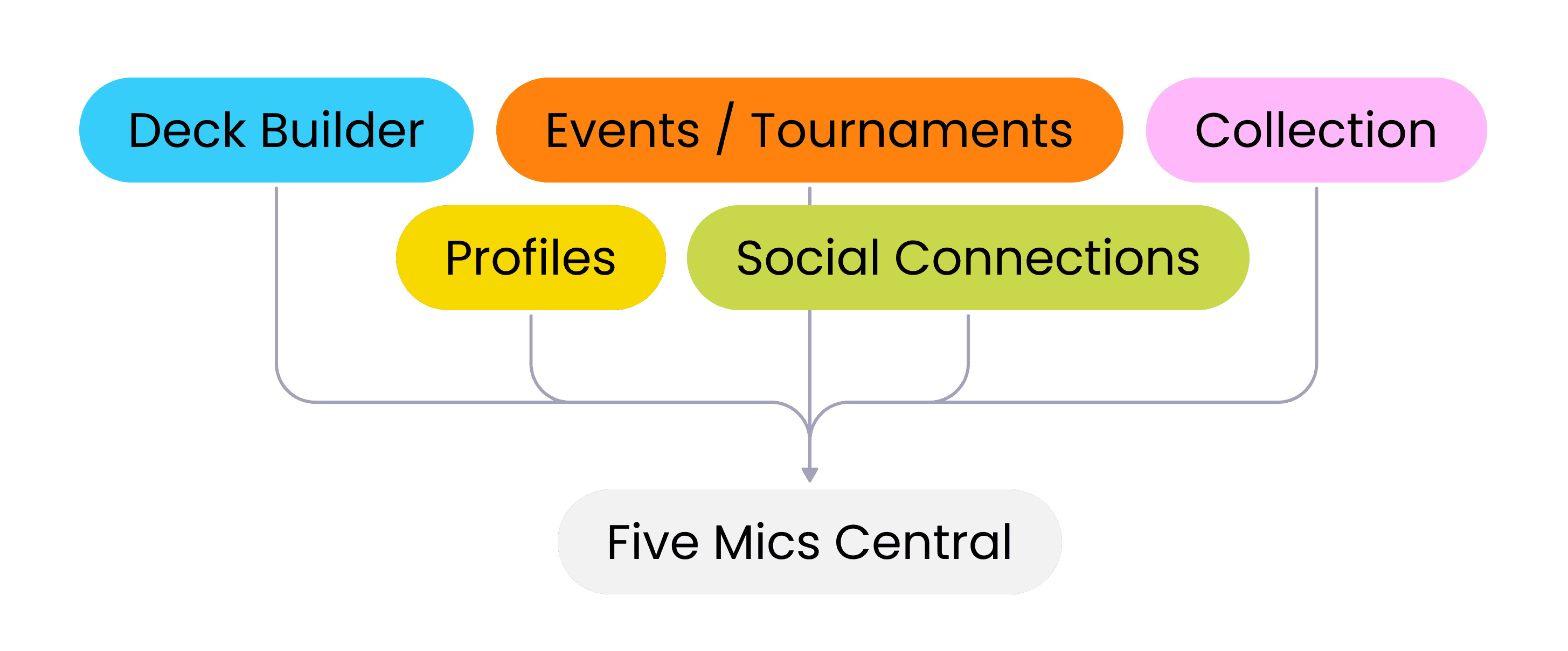
As new booster boxes gave players more cards to build and experiment with, the need for digital tools grew alongside the game. With no dedicated Five Mics platform for players to build, share, or connect, Five Mics Central became an opportunity to support deck building and collection management while creating new ways for the community to discover each other, organize events, and grow together.

02
Product Direction
I worked with the founder to shape the initial product vision through rapid AI-assisted prototyping, then studied existing TCG and community platforms to understand how deck building, profiles, events, and collections could work together.
Initial Product Vision
Competitive Research
What I looked at:





What I learned:
01 — Fragmented Ecosystems
Players often rely on separate third-party platforms for deck building, events, rankings, and community activity, leaving no single source of truth for the game ecosystem.
02 — Powerful, but Hard to Use
Many existing TCG platforms support deep functionality but come with dense interfaces and steep learning curves, creating an opportunity for clearer hierarchy and more approachable interactions.
03 — Community as Part of the Product
Connecting decks, profiles, events, and leaderboards creates more opportunities for players to discover each other, share strategies, and stay engaged beyond individual matches.
03
Define MVP
The initial vision extended beyond what we could realistically build for launch. We focused FMC on its core player experiences while partnering with TopDeck.gg for mature event and tournament tools.
By keeping event data connected across both platforms, players could manage events through TopDeck.gg while surfacing their activity on FMC. Rewards and other engagement features were deferred for future development.
Initial FMC Scope
Deck Builder
Player Profiles
Collection
Card / Deck Discovery
Leaderboard
Friends & DMs
Partner Integration
Event Creation
Tournament Management
Score Reporting
Deferred
Rewards & Currency
Customization
Administrative View
Color Mode Switch
04
IA & User Flow
I mapped the product architecture around a connected player ecosystem, linking collections, decks, profiles, events, and community discovery rather than treating each feature as an isolated tool.

From Collection to Community
Collect
Build
Publish
Engage
05
Designing the Core Experience


06
Bringing the Design into Production
I implemented the responsive UI in Plasmic and took on front-end work when product needs extended beyond the platform’s native capabilities.
Building Beyond the UI
While implementing the Deck Viewer, I used AI-assisted coding to build a dynamic chart that visualizes deck composition at a glance, then integrated it directly into Plasmic.

RESPONSIVE IMPLEMENTATION
Desktop + mobile layouts built in Plasmic
DECK ANALYSIS
Card stats and composition at a glance
CUSTOM CODE
AI-assisted chart embedded directly into the product
Turning Extra Cards into a Resale Loop
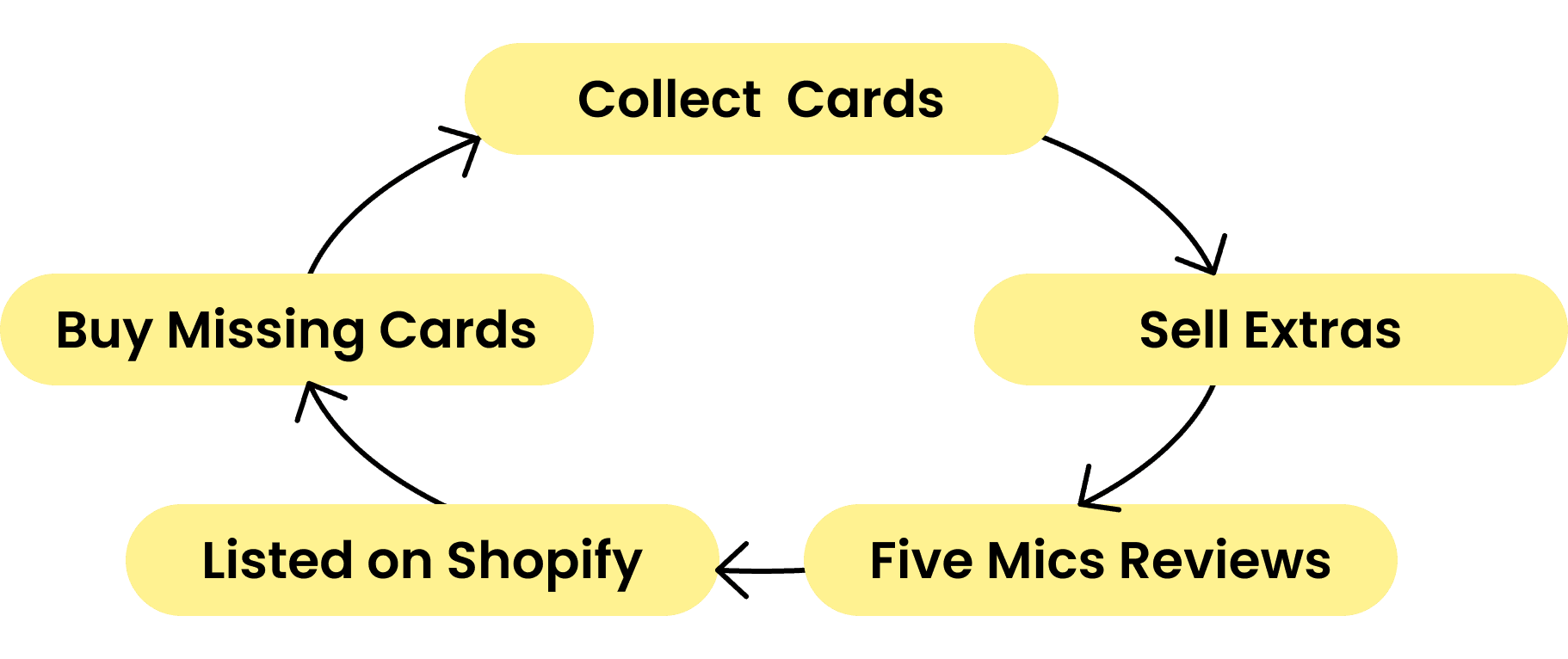
While building Collection, I saw an opportunity to turn duplicate cards into a resale loop. I proposed a Sell Cards flow connecting players’ collections to Five Mics’ review process and Shopify storefront.

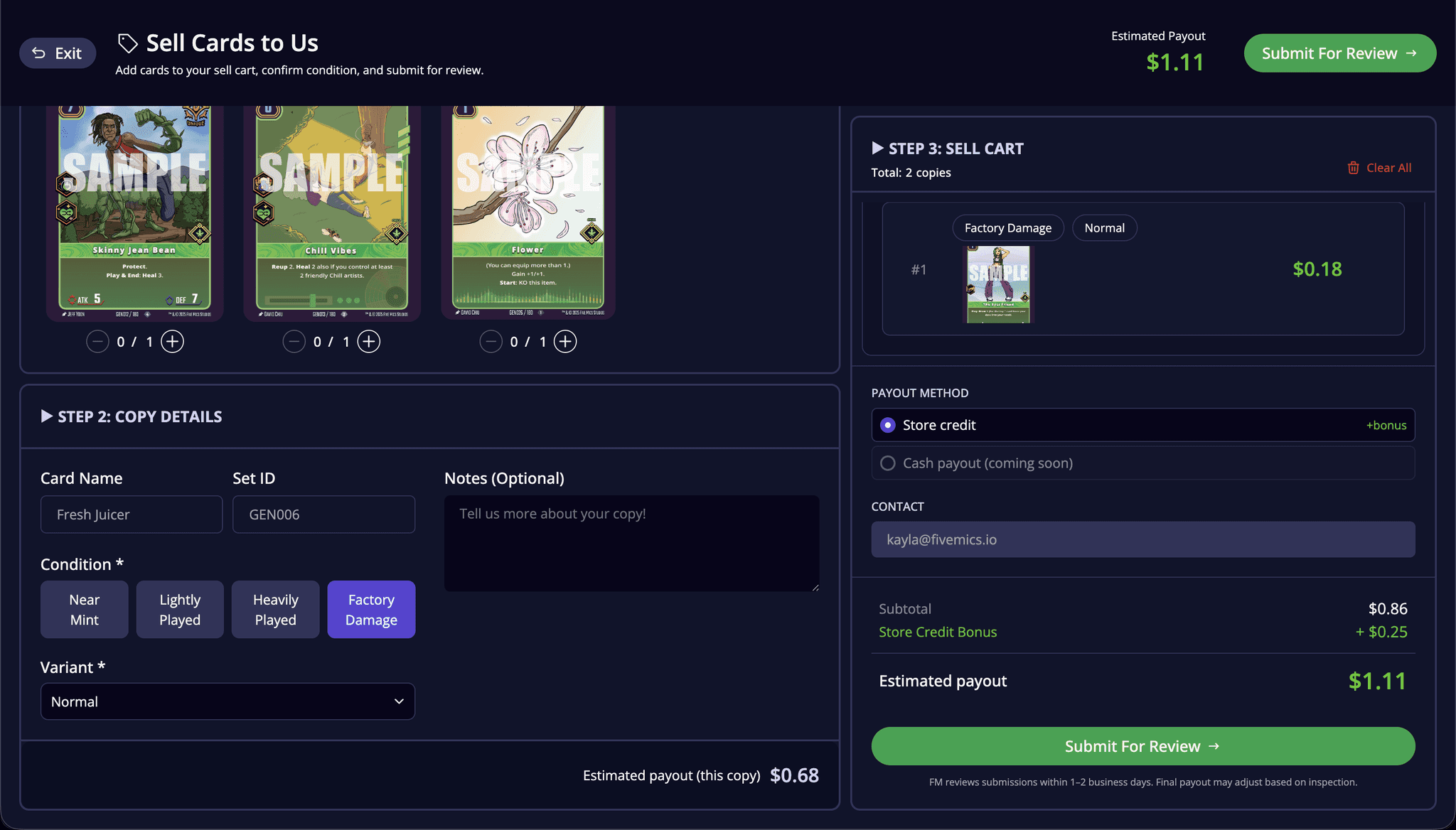
I implemented the front-end state logic to keep multiple selected cards editable, validated, and synchronized throughout the submission flow:
Select
Configure
Price
Validate
Submit
Review & List
Technical Challenge
Keeping collection data, per-card attributes, pricing, validation, and cart state synchronized across multiple selected cards.
07
Evaluation
From Concept to Launch
Five Mics Central launched as the digital companion to the physical TCG, bringing deck building, collections, player identity, and community discovery into one connected experience. Taking it from concept through implementation taught me to design beyond individual features, balancing product architecture, scope, technical constraints, and opportunities that emerge while building.
Timeline: 3 months
Opportunity → Align → Research → Scope → Structure → Design → Build → Launch