After literature review around the topics including psychology in international students, eating experiences, and self-identities, I conducted interviews with international students in NYC, focusing on their desire for nostalgic food. I discovered that their eagerness to these meals goes beyond mere consumption; it serves as a way to uphold and strengthen their sense of self-identity.
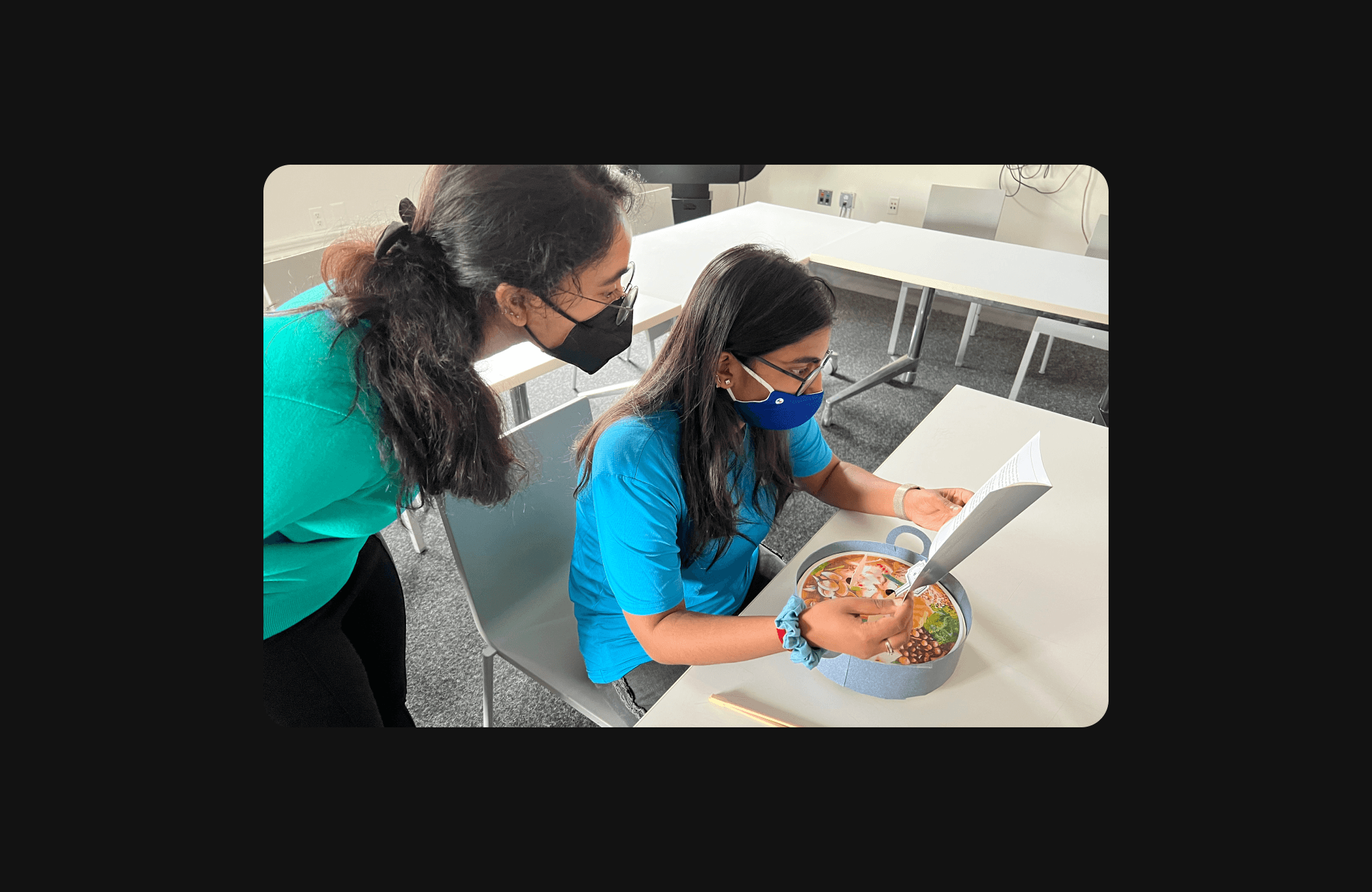
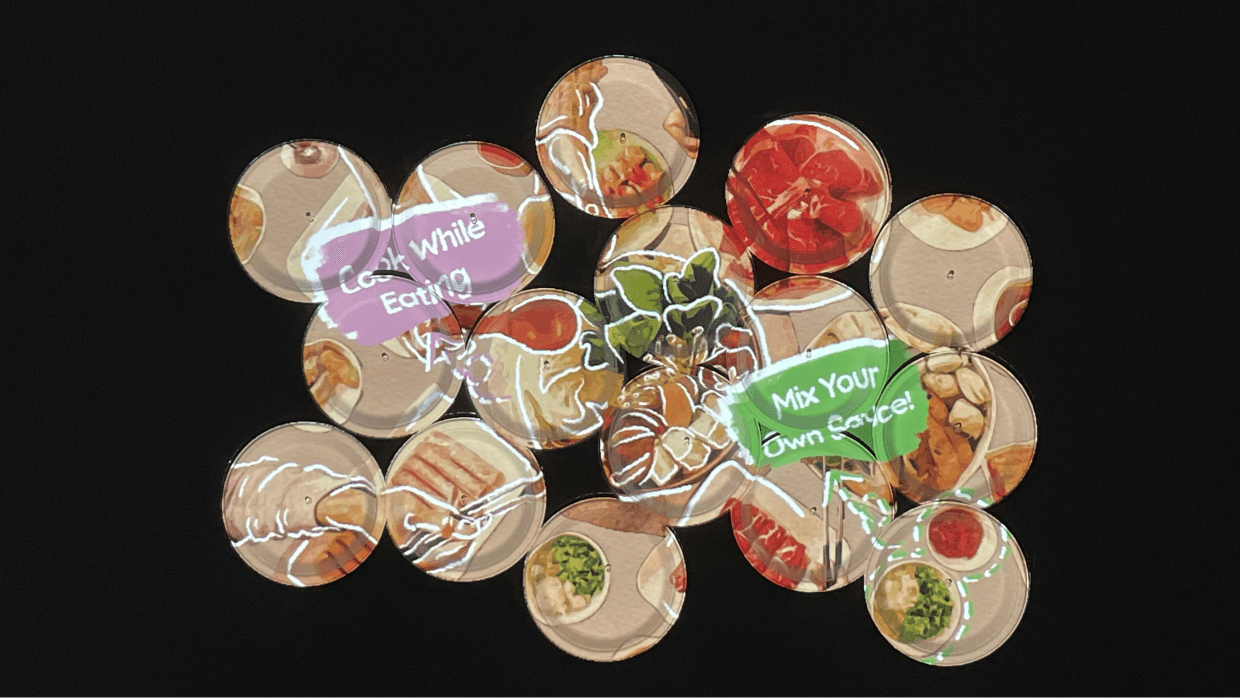
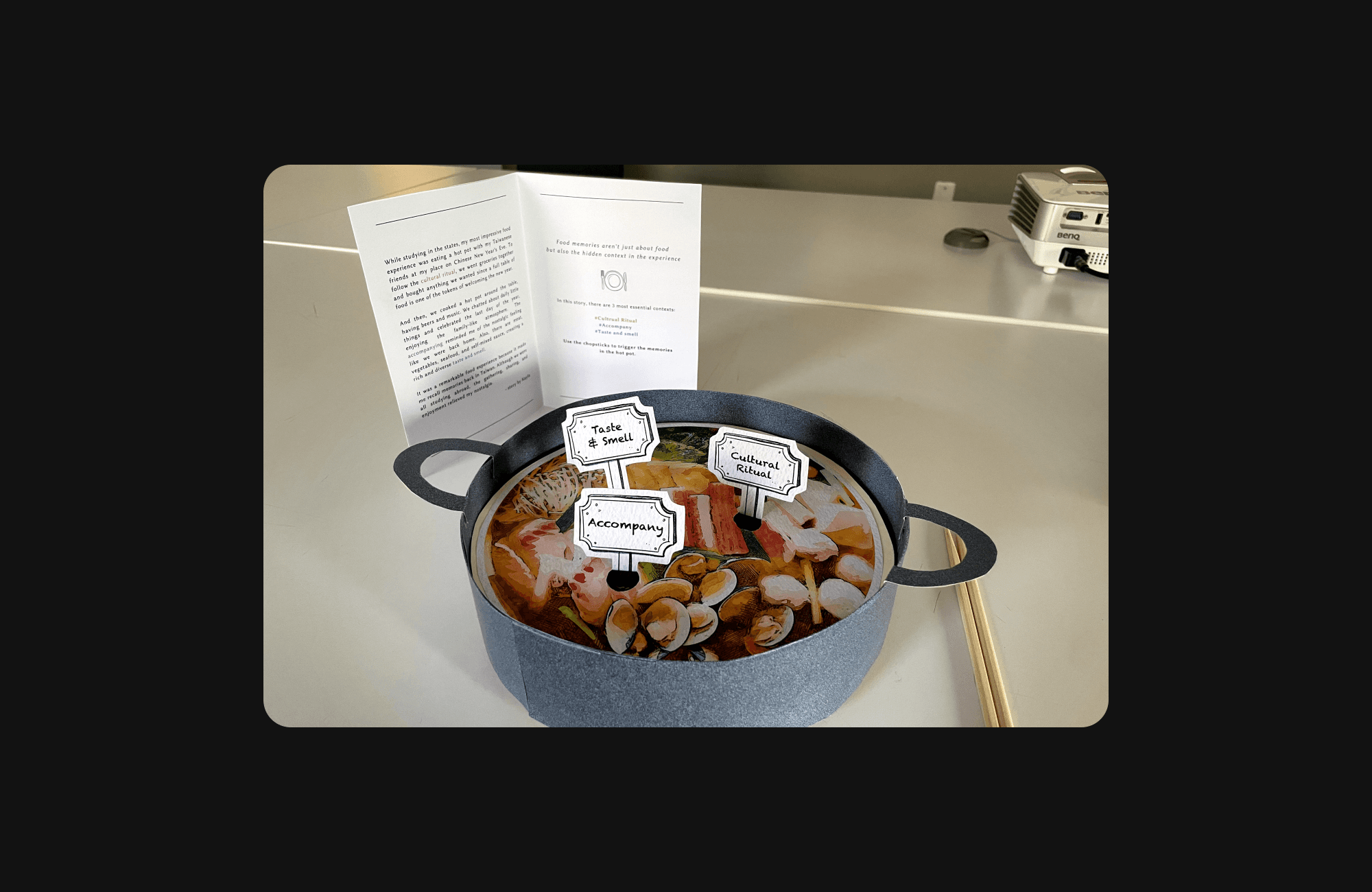
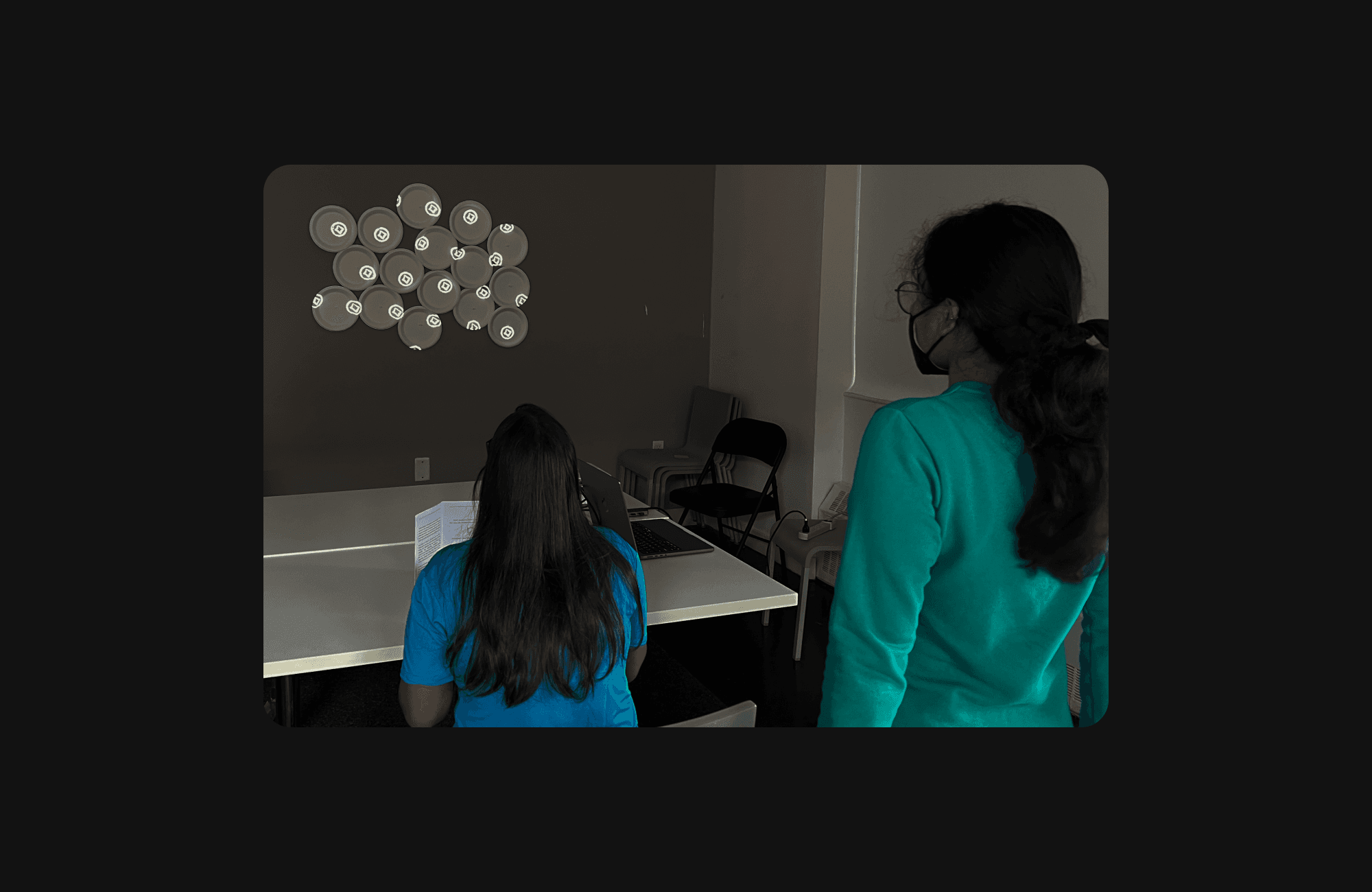
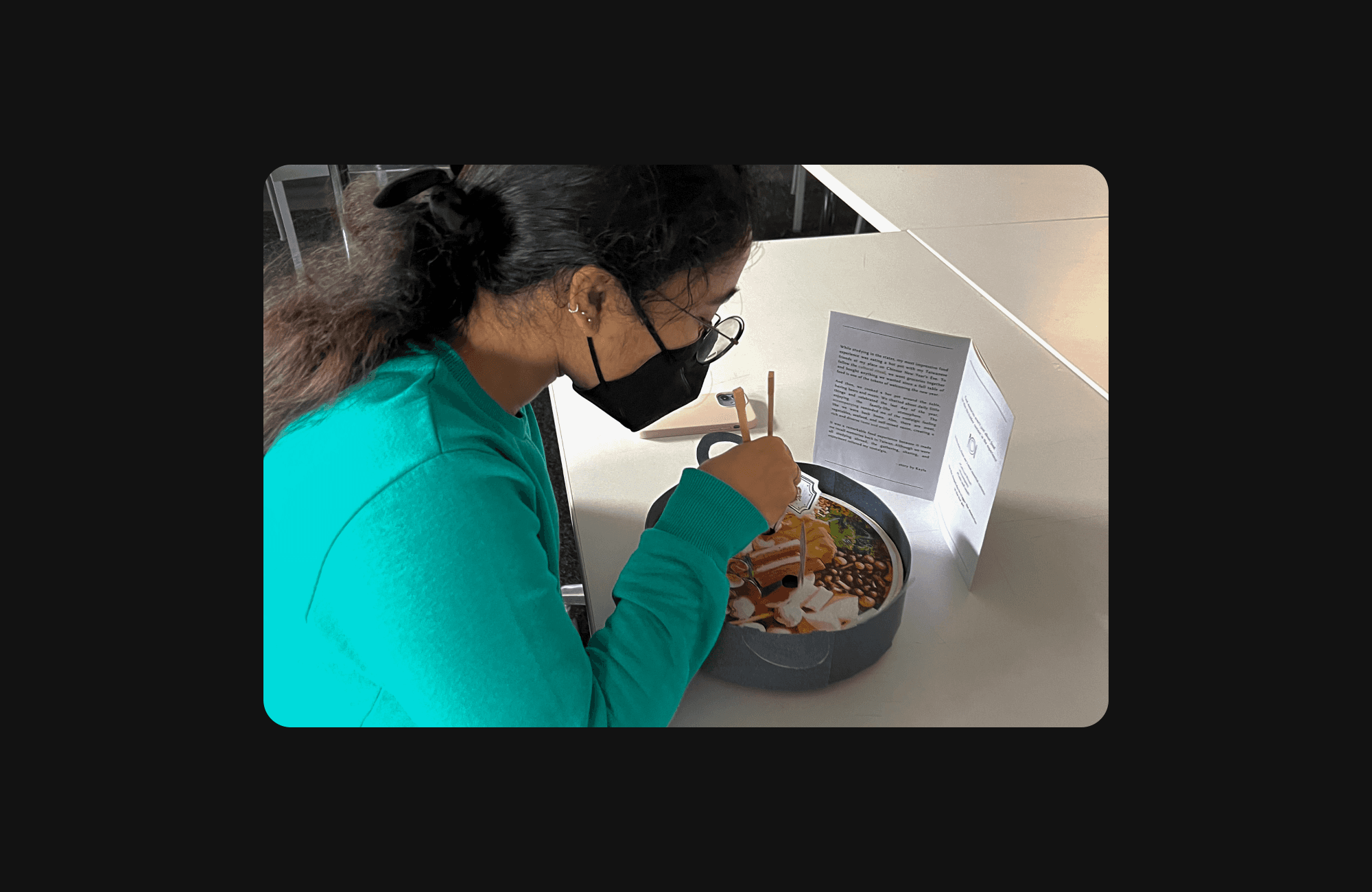
Therefore, I decided to recreate the emotions evoked during eating experiences. Using a hot pot model as an interactive medium, I focused on three significant elements: flavor, companionship, and cultural rituals. By incorporating sensors into the food model, these elements are activated when poked with chopsticks, resulting in corresponding animations that allow the audience to engage with and learn about the memories.
After literature review around the topics including psychology in international students, eating experiences, and self-identities, I conducted interviews with international students in NYC, focusing on their desire for nostalgic food. I discovered that their eagerness to these meals goes beyond mere consumption; it serves as a way to uphold and strengthen their sense of self-identity.
Therefore, I decided to recreate the emotions evoked during eating experiences. Using a hot pot model as an interactive medium, I focused on three significant elements: flavor, companionship, and cultural rituals. By incorporating sensors into the food model, these elements are activated when poked with chopsticks, resulting in corresponding animations that allow the audience to engage with and learn about the memories.
I received positive feedback from the users that the experience reminded them of their own food memories, resonating with the emotions and nostalgia from the interactions.
I received positive feedback from the users that the experience reminded them of their own food memories, resonating with the emotions and nostalgia from the interactions.